EN-ICHI Opens Up the Future of Family and Community
[Voices of Japanese Parents Abroad_Cambodia vol.1] Raising Five Children in Phnom Penh

Sayaka is raising five children in Phnom Penh with her Cambodian husband. In this first installment of a four-part series, we asked her about the on-the-ground realities of parenting and daily life.
“Children Are Society’s Treasure” — A Child-Rearing Environment Wrapped in Kindness
— First, what have you felt is “different from Japan” about raising children in Cambodia?
I think the local community environment is really good. For example, if we go to a restaurant and the kids get a little noisy or start bouncing on the sofa, no one gets angry. The staff will actually pick them up, try to soothe them—they’re truly kind to children. If a child is crying, people show genuine concern: “Are you okay? Maybe you’re hungry?”
— I see, it really feels like “the whole society is raising children,” doesn’t it?
Exactly. People look out for kids even if they’re not their own. I feel like that’s something you don’t often see in Japan these days. In Japan you might get looks as if to say, “Are you disciplining your child properly?” or feel a chilly gaze just because a child is barefoot. Cambodia is really easygoing. Maybe it’s because people don’t overthink things (laughs). It’s a very gentle environment for raising kids.
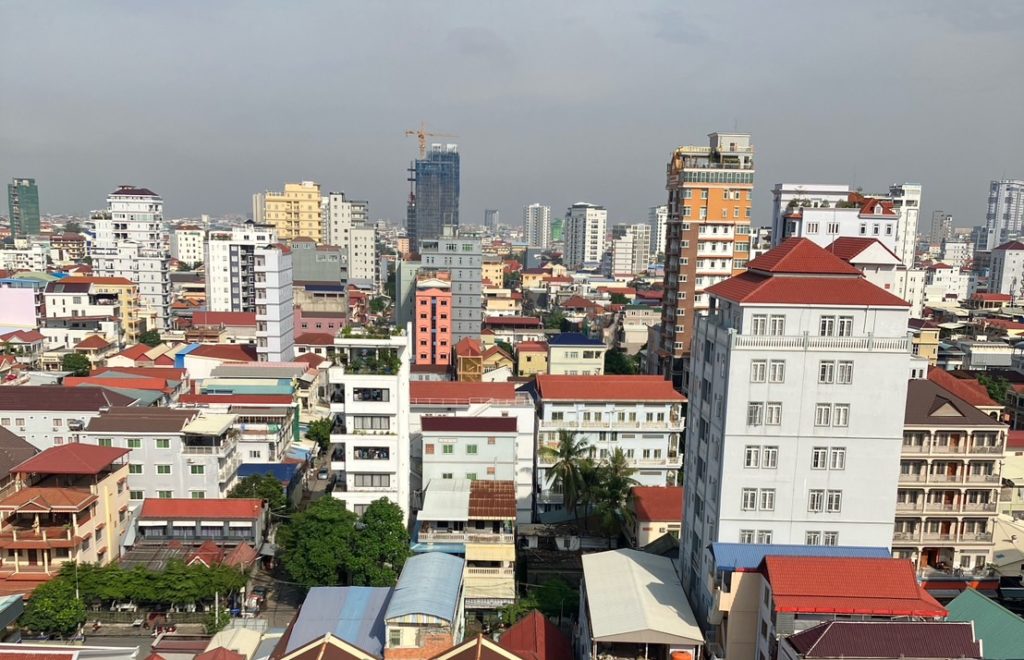
Phnom Penh cityscape
Growing Up Surrounded by Diverse Peoples
— What are some things you think are “great” about raising kids in Cambodia?
A lot of people come here for work from various countries, so it’s great that children can grow up encountering many different peoples. There are Indians, Chinese, Koreans, people from the U.S. and Canada, and from Africa as well. I think it’s wonderful that from a young age they develop a sense that “people are all the same.” And because they naturally encounter different languages, it’s also nice that they come to understand two or even three languages.
Scarcity of Child-Rearing Infrastructure and Everyday Ingenuity
— On the flip side, what do you find challenging about parenting there?
There aren’t many parks. So there aren’t many places for moms to gather with their kids. Safe sidewalks are another issue. Even when there are sidewalks, cars drive up onto them and they end up being used as parking areas, so there are hardly any pedestrian paths where you can walk with children. We sometimes walk 100–400 meters, but it’s dangerous, so I’m always a bit on edge.
— How do you usually get around?
Mostly by car or “tuk-tuk.” The slightly larger ones can fit all the kids, so we generally get around that way. They’re really convenient—you can hop on for about 100 yen for the minimum fare, and they’re easy to catch, so we even take them for short distances. I wish Japan had them too (laughs). But because of that, we don’t walk much, and I think we’re not getting enough exercise.
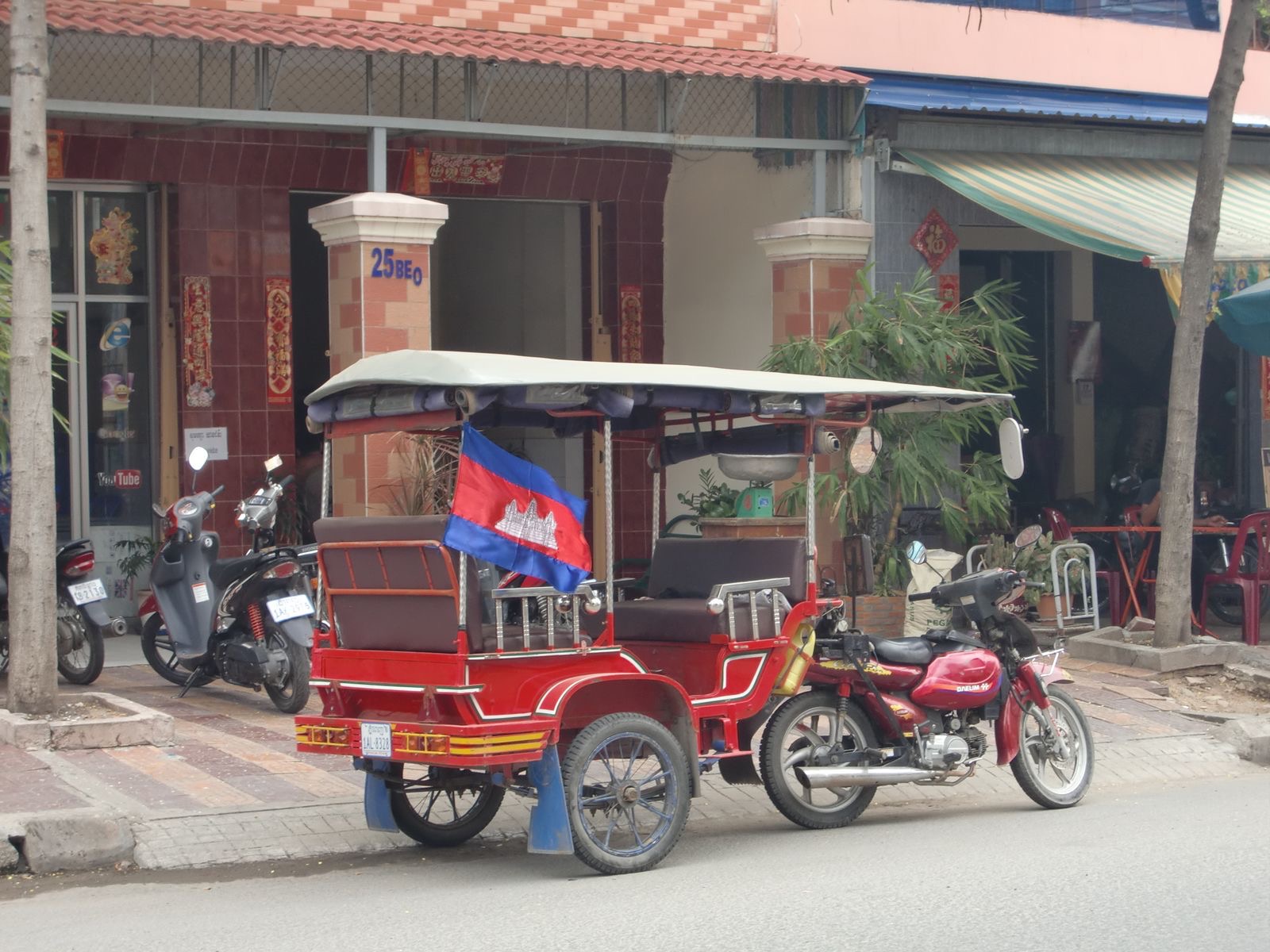
Tuk-tuk on the street
— So there aren’t many child-rearing support centers or facilities for families with children?
I don’t think there are many. Maybe I just don’t know about them, but… In my circle, the Japanese moms run a weekly, after-school-style gathering on their own. Some Westerners run baby classes and the like, but I’m not aware of anything the Cambodian government provides as a policy.
That said, Phnom Penh is a big city, so department stores have indoor playgrounds you can use for $2–3. My friends often take their kids to those. It’s so hot outside that it’s hard to play outdoors. Many apartments also have pools or playgrounds, so we use those spaces too.
Cultural Differences Felt in Daily Life
— Has anything surprised you about raising children in Cambodia?
Yes! The ways people show affection to kids are unique (laughs). When Cambodians think a child is cute, they’ll pinch their cheeks, give a light pat on the butt, or even give gentle love-bites. A lot of people show affection that way. They’re like, “They’re just too cute!!” At first I was really surprised, but you gradually get used to it (laughs).
— Interesting how affection varies across countries. Anything else?
I think the way people relate to each other—the sense of distance—is a bit different from Japan. Even among children, there isn’t really a culture of saying, “Can I borrow that?” and then, “Thanks,” when returning it. Kids will just use something and, when they’re done, toss it aside somewhere. And when they want to join a group, it’s not so common to say, “Can I join you?”
When adults scold children, they’ll say “No,” but they often don’t explain why it’s not allowed. I feel like explaining the reasons to kids isn’t really done, either at home or in schools.
Maybe related to that, when kids fight or there’s some issue between them, parents basically don’t step in. People don’t say much like in Japan. The basic stance is: “You two work it out yourselves.” There are the occasional overprotective parents, but overall it feels like Japan in the Shōwa era.
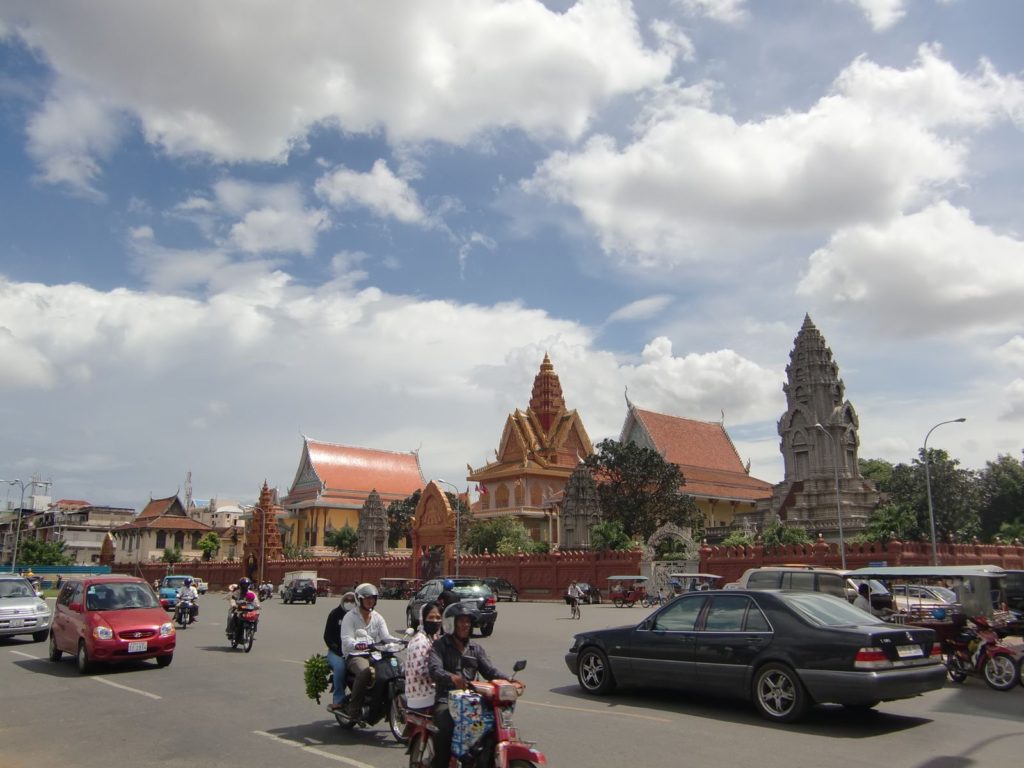
A main boulevard in Phnom Penh
It’s Important to Keep the Perspective that “We’re Being Allowed to Live Here”
— What do you think is important when raising children overseas?
I think it’s crucial to keep the feeling that “we’re being allowed to live here.” This isn’t our country. Live with respect for the local culture and customs. Just doing that makes a lot of things go more smoothly.
— That’s certainly an important perspective.
Japan is a developed country, so especially when you live in a developing country like Cambodia, all sorts of things will catch your eye. But the Japanese way of thinking isn’t always right, and it doesn’t necessarily apply everywhere. I feel it’s really important to maintain a sense of balance as human beings. While respecting others, we can share the “good things” we carry within ourselves.
[Voices of Japanese Parents Abroa_Cambodia]
Vol. 1 Raising Five Children in Phnom Penh
Vol. 2 A Birth Environment Where You Can Only “Pray”
Vol. 3 The Reality of Balancing Household Duties, Childcare, and Work
Vol. 4 An Overly Flexible Education System and the Lack of Emotional Education
