EN-ICHI Opens Up the Future of Family and Community
[Voices of Japanese Parents Abroad_Cambodia vol.2] A Birth Environment Where You Can Only “Pray”

Sayaka is raising five children in Phnom Penh with her Cambodian husband. Her two oldest children were born in Japan, and her three youngest were born in Cambodia. This time, we spoke to her mainly about the local childbirth situation
No support, all out of pocket
- Having actually given birth in Cambodia, what were the differences from Japan?
There are many, but first of all, in terms of costs, you have to pay for all childbirth expenses yourself. In Japan, there is a lump-sum childbirth allowance, but there is no such system in Cambodia. Delivery fees, hospital fees, etc. are all self-paid. There seems to be a very small amount of assistance available to Cambodian nationals, but in order to receive it, you have to prepare a complicated amount of paperwork. Foreigners generally pay for their own expenses.
- How much does childbirth cost?
When I gave birth at a local hospital, it was about 70,000 to 80,000 yen. At well-equipped local hospitals, it's around 1,000 dollars (about 150,000 yen). A C-section is said to be twice as expensive, at around 2,000 dollars (about 300,000 yen). At large hospitals that Japanese people living here use, childbirth costs over 2,000 dollars (about 300,000 yen).
Checkups are also at your own expense, costing 15 to 50 dollars per visit at local hospitals and over 10,000 yen per visit at hospitals that cater to Japanese people. However, checkups are only once every two months, which is not as frequent as in Japan.
- This can lead to a situation where "if you don't have money, you can't have a baby."
That's right, for an average Cambodian family, even giving birth at a local hospital is a significant burden. In fact, many families give up on having a baby for financial reasons, or limit themselves to one or two children.
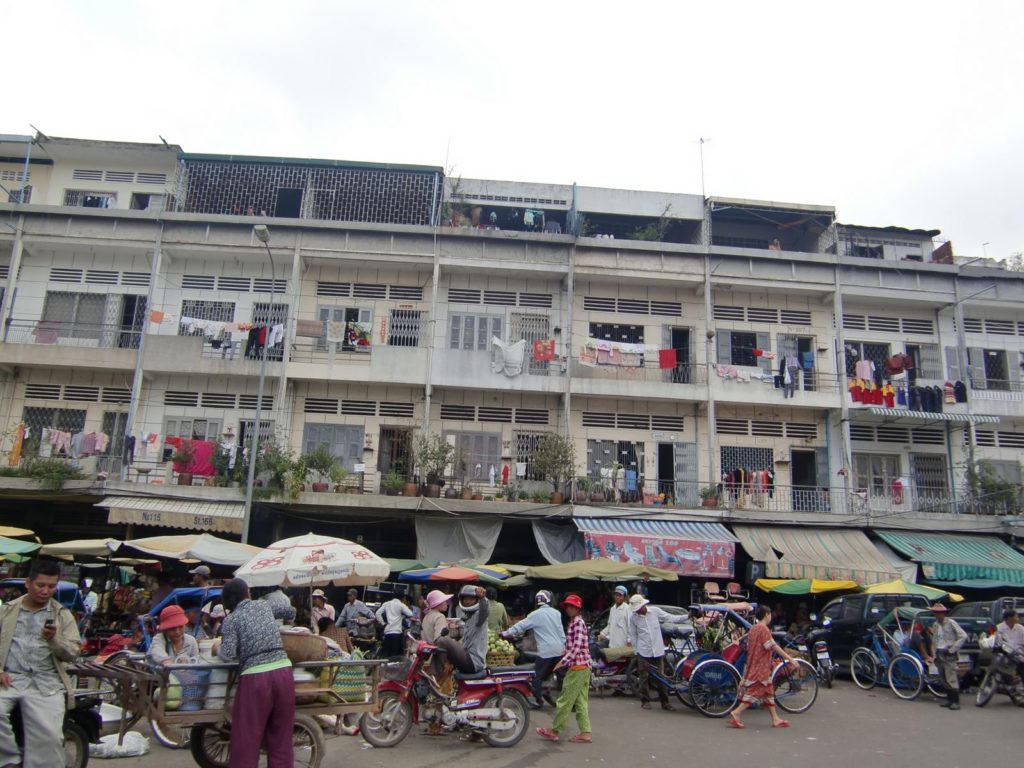
Cambodian cityscape
The reality of the workplace where lives are entrusted to
-What about the quality of medical care during childbirth?
I think that's the biggest difference from Japan. Because medical facilities are underdeveloped, they often can't respond if something happens to the mother or baby. For example, if the baby is born before 38 weeks, they say, "It's going to be a big problem." That's why doctors and midwives strongly advised me to stay on bed rest and not let the baby come out until 38 weeks. If something goes wrong, Cambodian hospitals can't handle it and the baby has to be transported to a neighboring country. Instead of relying on medical help like in Japan, you have to "pray for a safe birth."
-That must be quite unsettling.
Really. I was lucky to give birth safely, but I was always aware that anything could be life-threatening. Until I was able to give birth safely, I was anxious every day. I lived my life praying to my ancestors and the heavens for help (to give birth safely).
*The photo above is for illustrative purposes only.
"Technology and culture" different from Japan
-What was the medical care like during checkups and childbirth?
It's a mixed bag. Interestingly, the hospital where I gave birth used surprisingly good medical equipment. Apparently they used machines from a Japanese university, so the ultrasound images were clearer than in Japan, and I could even see the baby's face clearly in 4D.
I was amazed to see some veteran midwives with incredible skills, like being able to tell the baby's position and condition just by touching the stomach.
-Every country has some amazing midwives.
Yes, but on the other hand, the doctors were really bad at stitching, and it sometimes took 40 minutes to suture an episiotomy. All three of them were so bad that we complained every time.
Also, the postpartum uterine cleansing is amazing. In Japan, they wait for the blood to come out naturally, but in Cambodia, they stick their hand in and scrub it away with gauze. It's like wiping the floor with a rag! It's extremely painful.
However, I think this is probably because, based on their own experience, they knew leaving blood in the uterus could make the mother sick and that it was unsanitary. But it was so painful that I begged my husband every time to tell the midwife to stop and tell her that it would be okay because the blood would come out naturally and that it would be fine, but my pleas were lost.
*The photo above is for illustrative purposes only.
We need to be prepared to face life
Compared to Japan, giving birth was a much less reassuring experience. Was it mentally tough?
It's true that there wasn't the same sense of security as in Japan. But there was also a different kind of feeling of being protected. It's hard to explain, but it was more of a feeling of trust, hope, or something more intuitive.
In Japan, safety, security, and cleanliness are guaranteed, and the premise is that things will go according to plan. But in Cambodia, it's more of a "go with the flow" kind of feeling. Ultimately, I felt a strong sense that "the baby was born of its own efforts."
- Is it because medical care is imperfect that you face life even more?
Exactly. Because there's no convenience or precise management, you have to be prepared to face nature. That's why you feel so grateful when your baby cries after birth. "Ah, he's alive, he's healthy."
- Has that experience changed you personally?
Yes. Before, I felt more like, "I have to do it right, I have to give birth to a good baby." But now, I think, "As long as he's alive, it's OK." The most important thing is that children grow up healthy and well.
Of course, I wish the medical system were better. But it's precisely because things aren't in place that I've learned the importance of gratitude and relying on other people's help.
Raising children in a culture of "leaving things to nature"
-How long does it take to leave the hospital after giving birth?
In Cambodia, you can be discharged after four nights and five days at most, and three nights and four days at the earliest. Since my youngest children are at home, the short hospital stay was very helpful. It depends on the hospital, but the hospital I went to had a vaccination that was administered one week after discharge, and they also did a checkup at that time. The one-month checkup and subsequent checkups that are common in Japan are rare. Apparently, Japanese hospitals offer checkups at your own expense. Routine vaccinations are administered, but they are surprisingly expensive because they are self-paid.
-What is baby food like?
They sell convenient baby food packs like in Japan, but they are expensive. So, I think a lot of it is homemade. Babies here often drink soup, so we often mix it with rice. Porridge is also quite popular, so many people may feed that. Baby food packs are very welcomed as a gift from Japan. There are
few opportunities for detailed nutrition education in Cambodia, so the situation varies from family to family. Some families introduce baby food gradually, as in Japan, while others continue to feed their children paste-like foods even after they turn one year old. Perhaps due to a lack of knowledge about children's picky eating habits, some families only allow their children to eat what they like, or they may refuse to eat rice, and even when they get a little older, they continue to feed them powdered milk as their main food.
In our household, we have not implemented the step-by-step weaning method that is common in Japan since our third child. Since there are no health checkups or other procedures, no one tells us what to do, so it was an advantage to be able to introduce baby food at our own pace without rushing. In any case, we concluded that it is best to raise children on lightly seasoned foods when they are young.
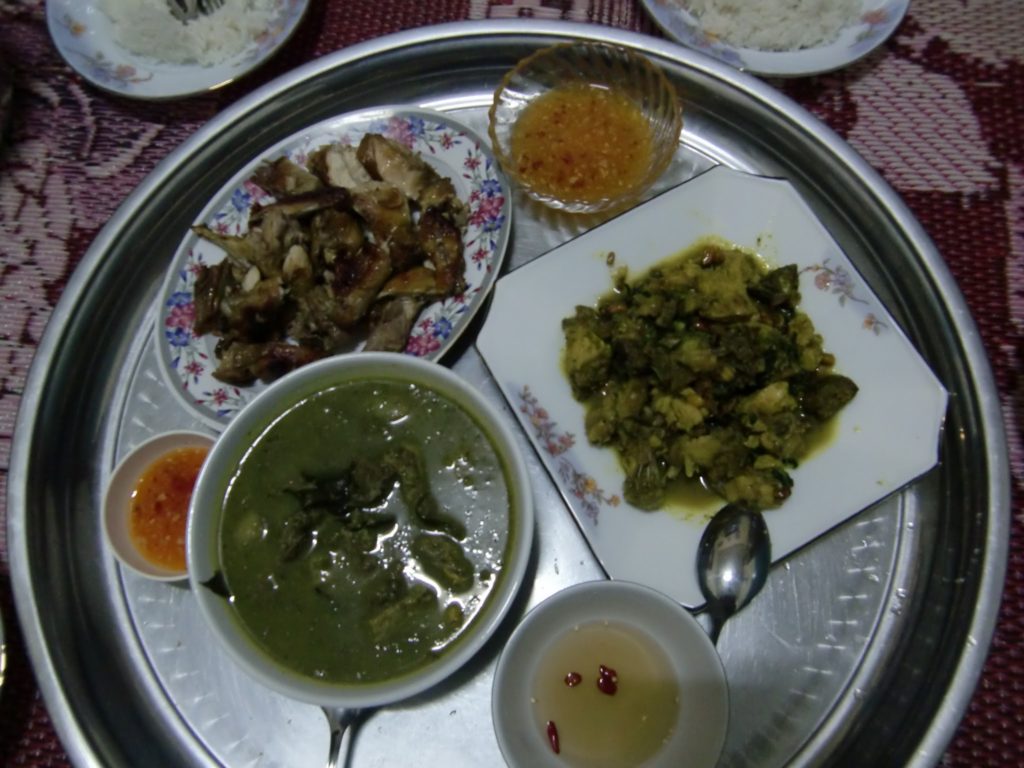
Cambodian home cooking
[Voices of Japanese Parents Abroa_Cambodia]
Vol. 1 Raising Five Children in Phnom Penh
Vol. 2 A Birth Environment Where You Can Only “Pray”
Vol. 3 The Reality of Balancing Household Duties, Childcare, and Work
Vol. 4 An Overly Flexible Education System and the Lack of Emotional Education
