EN-ICHI Opens Up the Future of Family and Community
[Voices of Japanese Parents Abroad_Korea Vol.3] Child-Rearing and Education in Rural Korea
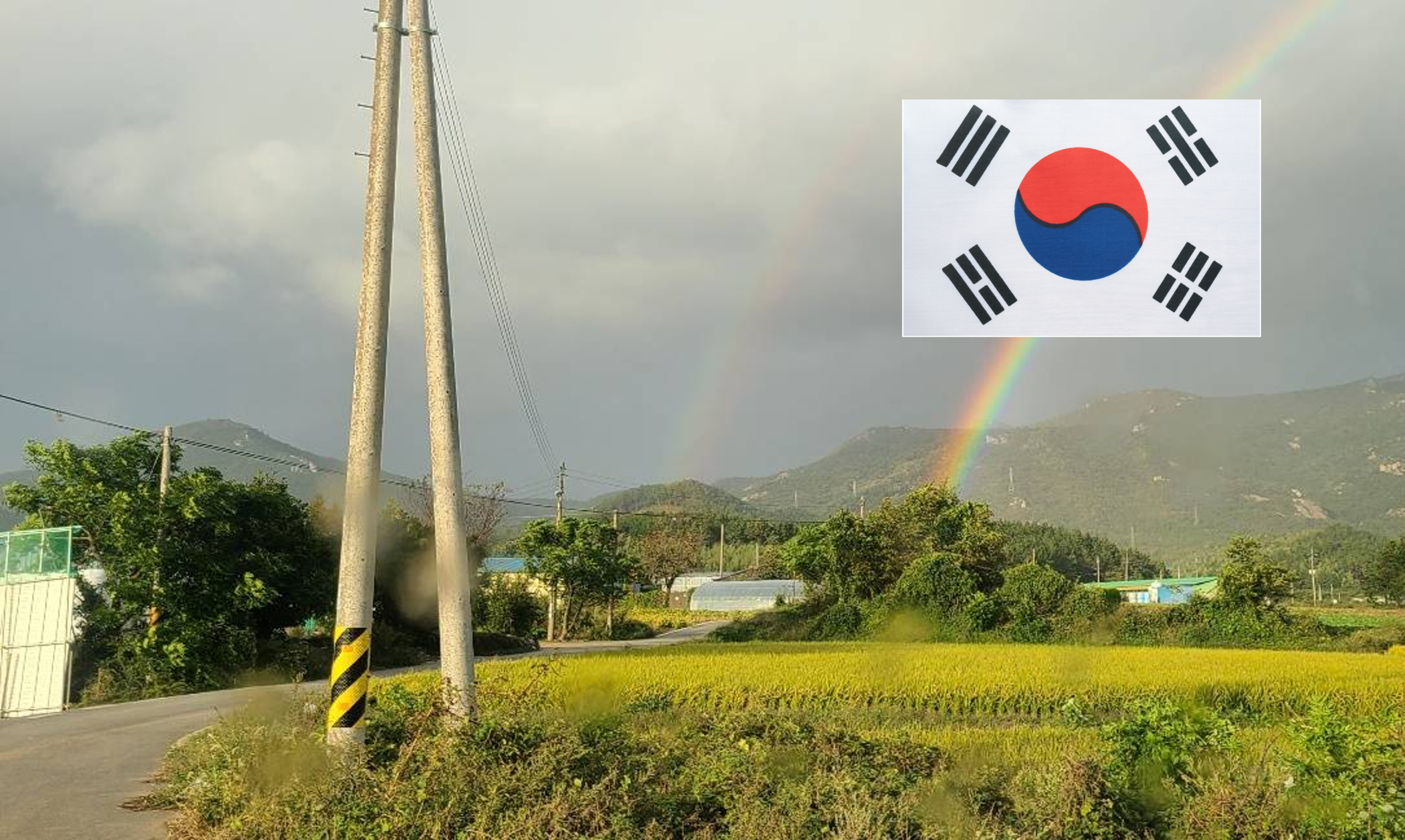
Satoko is raising five children in Haenam, a rural area in southwestern South Korea. Parenting in regional towns comes with realities quite different from those in large cities. In this article, we spoke with her about the local education environment and her everyday experiences of raising children across cultures in a rural setting.
Limited Choices and Strong Community Ties
— Could you tell us about the childcare and kindergarten system in rural Korea, and how parents choose facilities?
In Korea, families can choose between daycare centers and kindergartens. Our eldest son started daycare at age two, and our other children entered daycare at around eight months old.
Children can enter kindergarten from the age of four. In rural areas like Haenam, there are very few private facilities, so most children attend kindergartens attached to public elementary schools. While the kindergarten program itself is separate from elementary school, children sometimes participate together in school-wide activities such as field trips.
In urban areas, there are more options—for example, private daycare centers that offer English lessons with native speakers or specialized physical education programs. Multicultural centers also provide “international understanding education,” where people from countries such as Japan, Vietnam, or China introduce their cultures through activities like origami, traditional games, or costume experiences.
In rural areas, however, such facilities do not exist, and there are very few childcare centers to begin with. Even if a program looks appealing, it may be too far away for the daycare bus to reach, which greatly limits choices.
— How much does childcare or kindergarten cost?
In Korea, the government provides a child-rearing allowance. Once a child enrolls in daycare or kindergarten, this allowance is paid directly to the facility, so parents do not pay tuition or education fees themselves.
Items such as water bottles and basic supplies for kindergarten are often given as enrollment gifts, so parents generally have little out-of-pocket expense. Toothbrushes and toothpaste used at school may also be provided through support from the local agricultural cooperative. In rural areas, kindergarten can be almost completely free.
Daycare, on the other hand, requires more preparation. Parents need to provide items such as bedding for nap time, dishes, diapers, wipes, shared towels, and even toilet paper (for example, bringing ten rolls at a time), which can be costly.

Children playing on the beach (Photo provided by Satoko)
Well-Rounded After-School Learning — Expanding Children's Horizons Through Free Programs
— What is education like at local schools, and what kinds of after-school programs are available?
At elementary school, first-grade students—who do not have afternoon classes—can attend Banggwa-hu Sueop (after-school classes). In Haenam, these programs are provided free of charge. Children can take classes twice a week in activities such as 3D pen art or new sports. They can also use digital learning materials free of charge. On Saturdays, children can choose activities such as soccer, table tennis, horseback riding, or pottery—again, all for free. Our eldest son is currently taking pottery classes.
— How involved are parents in kindergartens and schools?
There are quite a few opportunities for parental involvement. At kindergarten, parent-participation classes are held every few months. Recently, we had a session where parents learned about tablet use and basic programming together with their children.
There is also a PTA-like organization called Hapmohoe (Parents’ Association). Parents can share opinions about school management and programs, attend lectures by educators on how to support adolescents, or participate in workshops such as cooking hamburgers with a visiting chef. These gatherings also function as social circles that help parents connect with one another. Participation is voluntary, but surprisingly many parents join.
Sports Day is an event where parental participation is expected. After the children’s competitions, there are events for parents as well, which helps strengthen a sense of community.
Nurturing “Another Language” at Home — Thoughts on Japanese Language Education
— How do you support Japanese language learning at home?
I try to speak Japanese to my children as much as possible, but the language they naturally pick up is Korean, so Korean tends to dominate. They can understand Japanese to some extent, but my second son, for example, no longer understands it very well.
We make an effort to keep using Japanese so that they can communicate with their grandparents in Japan. I believe it’s important not to make them dislike the language. Occasionally, I show them Japanese manga, such as Naruto, to give them opportunities to be exposed to Japanese. I feel that their Japanese improves most when they are actually in Japan, where they have an environment in which they need to use the language in real life.
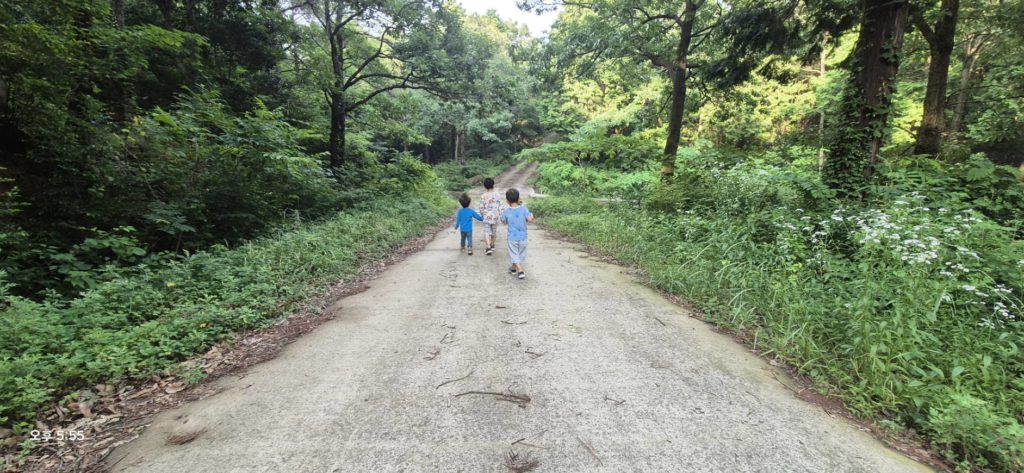
Children out for a walk (photo provided by Satoko)
[Voices of Japanese Parents Abroad_Korea]
Vol.1 Five Childbirths in Korea
Vol.2 Getting a Good Rest After Childbirth in Korea
Vol.3 Child-Rearing and Education in Rural Korea
Vol.4 The Reality of South Korea’s Declining Birthrate
