EN-ICHI Opens Up the Future of Family and Community
[Voices of Japanese Parents Abroad_Korea Vol.5] Children Cherished in Korea
“Just having children around makes a community feel warmer.” Satoko, who is raising five children in Haenam in southwestern Korea, lives each day with that feeling. Korean society is permeated by a cultural concept known as jeong—a deep sense of human affection and connection between people. Within this culture, there is a strong tradition of raising children collectively as part of the wider community. In this installment, Satoko shares her thoughts on Korea’s child-friendly society, the affectionate relationships between parents and children, and how raising children in a multicultural environment has reshaped her own values.
“If a child sits still, they must be sick” — A surprisingly tolerant parenting culture
— What aspects of raising children in Korea feel easier compared to Japan?
The biggest difference is how incredibly tolerant people are toward children and parenting. It goes beyond mere tolerance—Korean parenting culture is practically synonymous with it. In Japan, parents often try to keep their children quiet in public places. But in Korea, people will say things like, “If a child sits still, something must be wrong with them.”
Wherever we go—buses, trains, restaurants—people around us are very supportive. Even if children run around in a restaurant, it’s usually not an issue as long as other customers say it’s fine. Once, when I was pregnant, I took my child to a restaurant alone. My eldest daughter became fussy, and I couldn’t eat. But a customer sitting behind me offered to hold my child so that I could finish my meal. Another time, on a flight, strangers kept playing with my child and holding them the entire time. I feel that this kindness comes from Korea’s culture of "jeong" as well as the reality that, in a society facing a declining birthrate, children are seen as especially precious.
Raising children as a community — Elders watch over them like grandchildren
— What are your relationships with people in the local community like?
Many elderly people here have grandchildren who moved away to Seoul, so they treat other people’s children almost like their own grandchildren. There’s a strong culture of looking after children as a community. People will say things like, “My grandchild is about this big,” and pick up my kids.
For example, when the village organized a group trip—chartering a bus to travel somewhere—I told them, “It might be inconvenient if I bring the kids.” But the villagers insisted, saying, “Bring them! You have to come!” Everyone helped take care of the children. I was incredibly grateful.
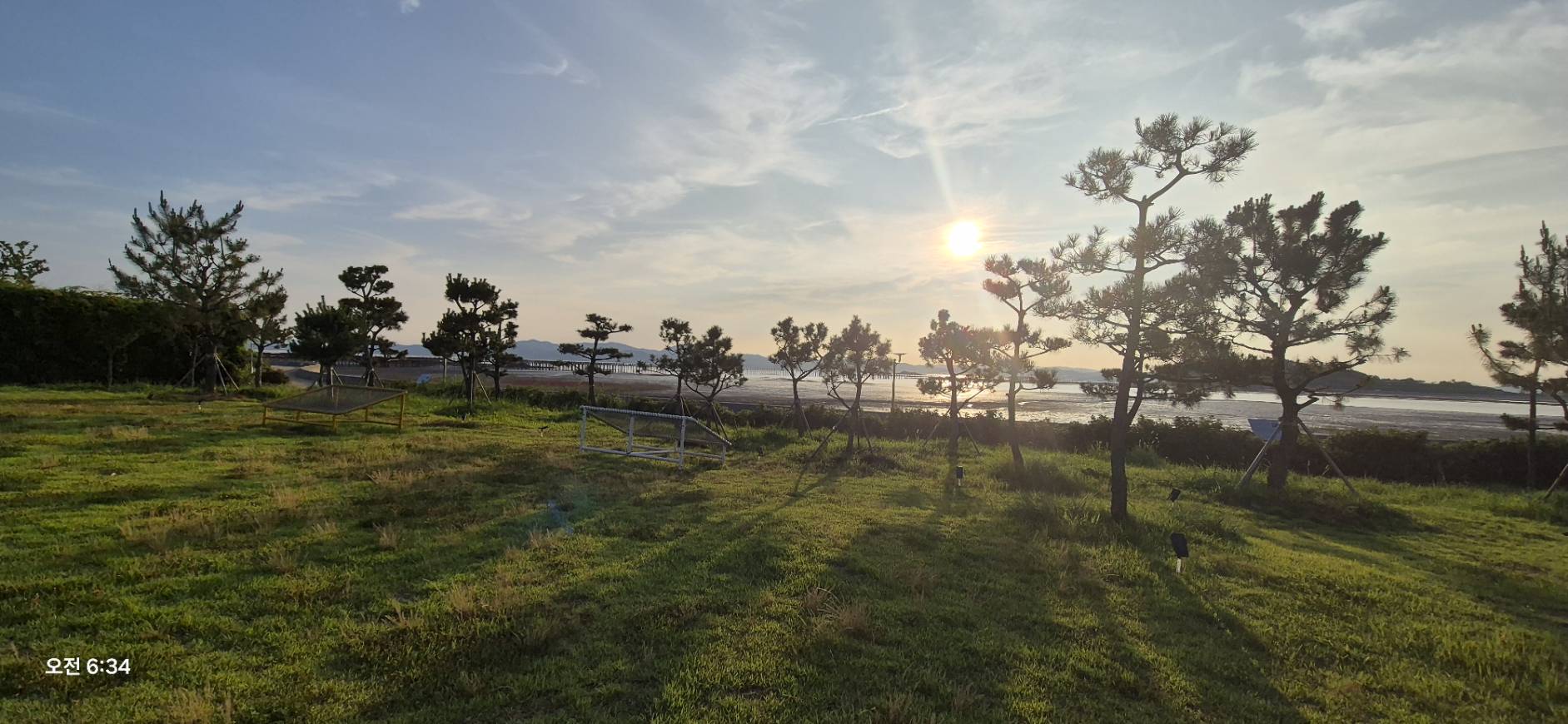
At a seaside park (Photo provided by Satoko)
Affection and “Saranghae” — A country where love is openly expressed
— Have you noticed other differences between parenting in Korea and Japan?
Yes. In Korea there is much more physical affection and open expression of love. For example, when parents walk their children to the school building, they say 'Okay—ppoppo!' (Korean baby talk for 'kiss') and send them off. My husband also tells the children “Saranghae” (“I love you”) when they leave. The children themselves often hold hands and walk together in a line.
You’ll also see many mothers rushing toward the daycare bus shouting things like, “My son! My daughter!” as their children get off. Expressions of affection are very visible and natural.
— Were there any other cultural customs that surprised you?
One thing that truly shocked me in rural Korea is how common it is for children to be left completely unattended. Parents will simply let their kids wander off and play wherever they like, with no one keeping an eye on them. I think this varies by region, but it seems to stem from the older generation’s experience growing up in self-sufficient rural communities where adults were busy working and children played on their own.
In the past there were fewer cars and fewer risks. But today there is still traffic, so I don’t always feel it’s entirely safe. Even so, many local families seem to assume it’s fine to leave their children somewhere—sometimes even at my house. When they see me watching my own children play, they think, “Great, our kids can play here too,” and leave them there without saying anything. That was probably the biggest cultural surprise for me.
Living with "jeong" — What parenting abroad has taught me
— How has raising children overseas changed your own values?
In Japan, the deeply ingrained belief that you must never inconvenience others had always shaped the way I thought. But thanks to Korea's culture of jeong and the warmth of a community that embraces children as its own, my outlook on life has changed profoundally.
Compared with Japan, where community ties have become weaker, people in Korea interact with neighbors much more frequently. There is a sense of give-and-take—helping each other when needed. Raising many children can be challenging for me as well, but now when I see someone struggling with parenting for the first time, I naturally find myself saying, “Can I help you?”.
Another thing that feels special is that just the fact that a Japanese family lives in the community makes people proud of the area. They say things like, “This is a good place.” I feel fortunate to be welcomed as a member of the community here.
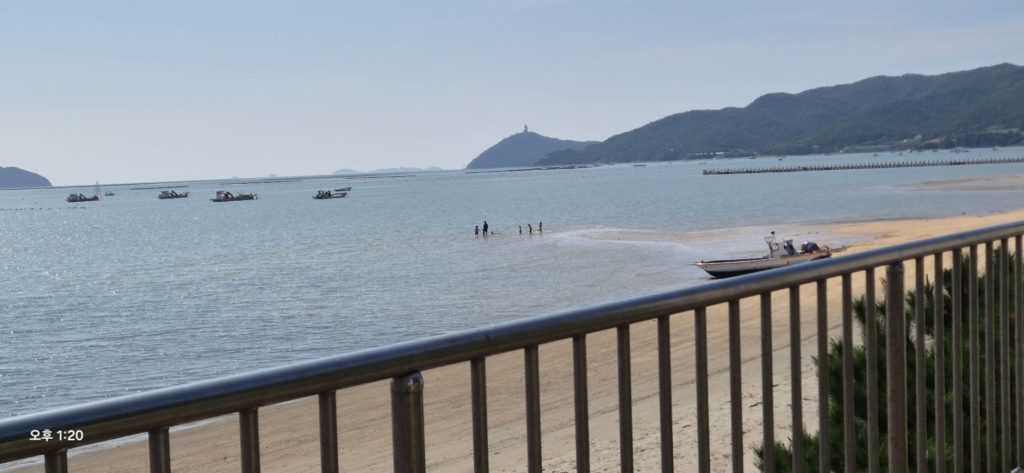
Children playing by the sea (Photo provided by Satoko)
[Voices of Japanese Parents Abroad_Korea]
Vol.1 Five Childbirths in Korea
Vol.2 Getting a Good Rest After Childbirth in Korea
Vol.3 Child-Rearing and Education in Rural Korea
Vol.4 The Current State of Korea's Declining Birthrate
Vol.5 Children Cherished in Korea
