EN-ICHI Opens Up the Future of Family and Community
[Info. File] Current Status of Foreign Residents in Japan (as of the end of June 2025)

Based on a press release by the Immigration Services Agency of Japan
Number of Foreign Residents
On October 10, 2025, the Immigration Services Agency released its announcement titled “Number of Foreign Residents as of the End of June 2025.”
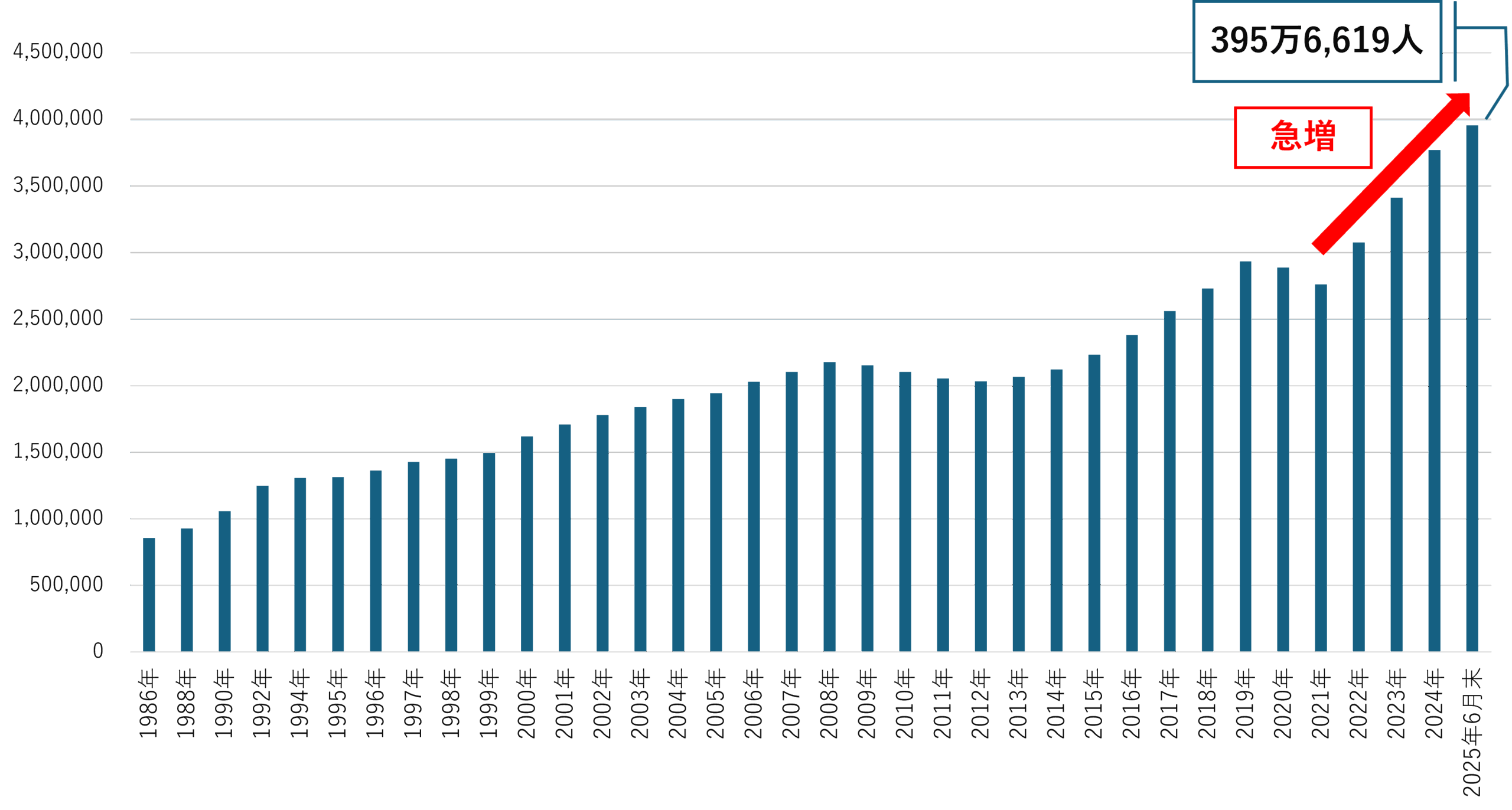
[Figure 1] Trends in the Number of Foreign Residents
Source: Created by the author based on e-Stat "Statistics on Foreign Residents (formerly Statistics on Registered Foreigners)"
(Note 1) Except for June 2025, all figures refer to year-end totals.
(Note 2) “Foreign residents” refers to mid- to long-term residents and special permanent residents (excludes short-term visitors such as tourists).
According to the press release, the number of foreign residents as of the end of June 2025 reached 3,956,619, an increase of 187,642 people (5.0%) from the previous year-end, marking a new all-time high (Figure 1). Looking at long-term trends, although temporary declines occurred following the 2008 global financial crisis, the 2011 Great East Japan Earthquake, and during the COVID-19 pandemic starting around 2020, the overall number of foreign residents in Japan has continued to rise steadily.
Growth has been particularly strong since 2021, in the post-pandemic recovery period. The Specified Skilled Worker (SSW) program, launched in 2019, has accelerated the intake of foreign labor and is widely seen as a major driver of the recent increase. As a result, the total number of foreign residents has nearly doubled over the past 13 years—from 2,033,456 at the end of 2012 to its current level.
[Figure 2] Composition of Foreign Residents by Nationality/Region (as of June 2025)
-1024x730.png)
Source: Compiled by the author based on the Immigration Services Agency (2025a), “Published Materials (as of the End of June 2025).”
Foreign residents in Japan are predominantly from Asia. China tops the list with 900,738 residents (22.8%), followed by Vietnam with 660,483 (16.7%) and South Korea with 409,584 (10.4%). Together, these three countries account for nearly half of all foreign residents (Figure 2). Nepal ranks fifth with 273,229 residents (6.9%), and recorded the largest year-on-year increase—40,186 people, a significant 17.2% rise. Indonesia also saw notable growth, with an increase of 30,865 people (15.4%), the second largest increase among all nationalities.
[Figure 3] Composition of Foreign Residents by Residence Status (as of June 2025)
-1024x763.png)
Source: Compiled by the author based on the Immigration Services Agency (2025a), “Published Materials (as of the End of June 2025).”
(Note 1) “Designated Activities” includes more than 50 types of activities individually designated by the Minister of Justice, such as “working holiday,” “job-hunting after completing Technical Intern Training,” “job-hunting after university graduation,” and “pending refugee application,” among others.
(Note 2) “Others” includes “Highly Skilled Professional,” “Professor,” “Artist,” “Religious Activities,” “Journalist,” “Business Manager,” “Medical Services,” “Researcher,” “Instructor,” “Skilled Labor,” “Intra-company Transferee,” etc.
(Note 3) “Special Permanent Residents” refers to individuals from the Korean Peninsula and Taiwan (and their descendants) who had been residing in Japan since before World War II and whose legal status was secured after the war.
By residence status, the largest category is Permanent Residents, numbering 932,090 (23.6%) (Figure 3). A notable trend is the sharp increase in the number of Specified Skilled Workers (SSW), which reached 336,196 (8.5%), up 51,730 (18.2%) from the previous year-end. This reflects the rapid transition from Technical Intern Training to SSW, as well as strong new intake.
Other major categories include: "Engineer/Specialist in Humanities/International Services": 458,109 (11.6%), up 9.4% year-on-year, "Technical Intern Trainees": 449,432 (11.4%), down 1.6%, "International Students": 435,203 (11.0%), up 8.2%—indicating renewed inflows after the pandemic.
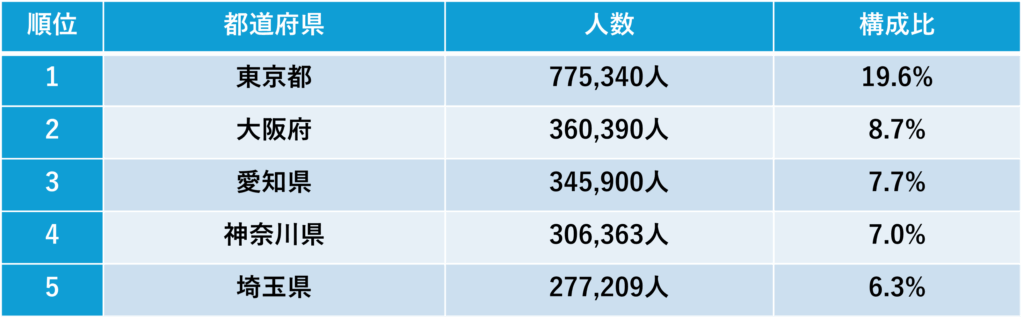
[Table 1] Prefectures with the Largest Foreign Resident Populations (as of June 2025)
Source: Compiled by the author based on the Immigration Services Agency (2025a), “Published Materials (as of the End of June 2025).”
More than half of all foreign residents live in the five prefectures listed in Table 1. Among them, Osaka recorded the highest year-on-year growth rate (8.0%), followed by Chiba (6.9%) and Oita (6.8%). The composition of residence statuses varies by region: major metropolitan areas such as Tokyo and Osaka host more professionals, while rural regions tend to have higher proportions of Technical Intern Trainees and SSW workers.
As Japan’s population continues to shrink and age, foreign residents are becoming increasingly indispensable as workers supporting a wide range of industries and as members of local communities. At the same time, challenges stemming from differences in language, culture, customs, and systems have become more visible. In July 2025, the Cabinet Secretariat established the “Office for a Society of Well-Ordered and Harmonious Coexistence with Foreign Nationals.” A key challenge going forward will be ensuring both pillars—enhanced support and acceptance as well as the maintenance of norms and social order—to realize a cohesive society.
Illegal Overstayers
[Figure 4] Trends in the Number of Irregular (Overstaying) Residents

Source: Immigration Services Agency (2025b), “Published Materials (as of July 1, 2025), Figure 1.”
In addition to legally residing foreign nationals, addressing the issue of individuals who remain in Japan after their residence status expires—so-called overstay—has become an urgent policy concern. According to the press release “Number of Irregular Residents in Japan (as of July 1, 2025)”, the number of irregular residents stood at 71,229, a decrease of 3,634 (4.9%) from January 1 of the same year (Figure 4).
[Figure 5] Nationalities and Residence Statuses of Irregular Residents (as of July 1, 2025)
-1024x608.png)
Source: Compiled by the author based on the Immigration Services Agency (2025b), “Published Materials (as of July 1, 2025).”
By nationality, Vietnam (18.3%), Thailand (15.3%), and South Korea (14.4%) together account for roughly half of all irregular residents (Figure 5). By residence status at the time of becoming irregular, "Short-term Stay" accounts for 60.7%, indicating that many individuals entered Japan for tourism, business, or family visits. This is followed by "Technical Intern Training" (14.7%) and "Designated Activities" (10.0%), with these three categories together comprising about 85% of all irregular residents.
Thailand and South Korea—countries with large numbers of irregular residents originating from “Short-term Stay”—are exempt from visa requirements for short-term visits. Indonesia, Taiwan, and Turkey also qualify for visa exemption under certain conditions. While visa exemption schemes facilitate tourism and short-term business travel, concerns have been raised that they may also be misused, contributing to irregular stays.
Those who remain without a valid residence status are not permitted to work, increasing the risk of falling into unregulated or illegal employment. Such conditions not only lead to deterioration in labor standards but also undermine the integrity of the labor market. Furthermore, restricted access to medical care, welfare, education, and housing makes daily life extremely precarious and may ultimately affect public safety and social stability.
Given these issues, the government announced the "Zero Illegal Foreign Residents Plan for the Safety and Security of People in Japan" on May 23, 2025, with the aim of establishing a smoother and stricter immigration control system. At the same time, ensuring human rights protections and humanitarian considerations for irregular residents remains an important challenge.
Reference materials
- Immigration Services Agency of Japan (2025a) “Number of foreign residents as of the end of June 2025,” https://www.moj.go.jp/isa/publications/press/13_00057.html (accessed November 10, 2025).
- Immigration Services Agency of Japan (2025b), “Number of Illegal Overstayers in Japan (as of July 1, 2025),” https://www.moj.go.jp/isa/publications/press/13_00058.html (accessed November 10, 2025).
- Ministry of Justice (2025) “Zero Illegal Foreign Residents Plan for the Safety and Security of People in Japan,” https://www.moj.go.jp/isa/content/001446180.pdf (accessed November 17, 2025).
