EN-ICHI Opens Up the Future of Family and Community
[Voices of Japanese Parents Abroad: Switzerland, Vol. 5] Establishing Firm and Thoughtful Family Rules

Ai (pseudonym), a mother raising four children in Switzerland, says that living in such a multicultural society makes it all the more important to have clear and consistent family rules.
The Importance of “Watching Over” Rather than Controlling
— You mentioned that the way parents relate to their children in Switzerland feels different from Japan, right?
Yes, I think there’s a much stronger emphasis on “watching over” rather than actively intervening. For example, in Japan, if a child touches another kid’s toys at the park, the parent might quickly scold them with a “Don’t do that!” But in Switzerland, that kind of response is rare. In most cases, the parents just observe quietly from a distance.
Overall, I feel that Swiss parents don’t try to do too much. The priority is to make space for the child to think for themselves. There’s a cultural tendency to avoid stepping in too quickly or preparing everything in advance for the child.
What’s valued is letting children notice things on their own and learn through those experiences. Maybe that’s why kids here seem to grow up more freely—at their own pace, finding their own path as they go.
*The photo above is for illustrative purposes only.
The Importance of “Our Own Family Rules”
— I see, so there’s a strong cultural emphasis on “watching over” children. Are there any other values you personally hold dear in your parenting?
Yes, along with taking a step back and observing, I also place great importance on having clear rules within our own family. For instance, depending on their cultural background, some children have their ears pierced as early as infancy, or you might see kids dyeing their hair in elementary school. Since Swiss schools don’t have strict rules like in Japan, there are no dress codes—kids are free to wear what they want and style their hair however they like. That’s exactly why it’s so important for us to establish “our own family rules” and make sure our children understand them.
Different families have different values, influenced by nationality or even just personal beliefs. So I try not to impose our rules on my children’s friends. At the same time, I encourage my own kids not to just go along with what others are doing, but to stop and think: “What do I want to do?” or “What do I believe is right?” I want them to make thoughtful choices, not just follow the crowd.
*The photo above is for illustrative purposes only.
Why Family Rules Matter in a Place Without a Shared “Normal”
— What kinds of rules do you have in your family?
One example is curfew time. In Switzerland, it’s cloudy and cold for nearly half the year, so when summer finally comes, everyone—adults and children alike—wants to make the most of the sunshine. People tend to stay outside much later than you’d expect. In our family, we set a limit: outdoor play ends by 6:30 p.m. But some kids from Eastern European backgrounds are still out playing until 9 or even 10 at night.
That’s partly due to climate differences and the habits that come with them. In those cultures, it’s common to rest indoors during the hottest part of the day, like a siesta, and then head outside in the cooler evening hours. So sometimes we get a doorbell ring around 7 p.m. with kids asking, “Wanna play now?” But for us, it’s already close to bedtime, so we usually have to say no. And since it stays light out until nearly 9 p.m. in summer, it’s easy for kids to forget how late it is.
When I look at other families, there are often things that surprise me as a Japanese parent. For instance, some families skip one or more meals a day for religious reasons. In many Swiss households, dinner is a light meal—usually just bread, cheese, and ham—so some kids just eat a sandwich at the park and call it dinner. Others go straight to bed after playing outside and take their shower in the morning. There really isn’t a single “normal” way of doing things here.
That’s why, in our family, we’ve learned to create and adjust our own set of rules, depending on the kids’ ages and needs. We talk with our children and decide together: “This is how we do things in our home.”
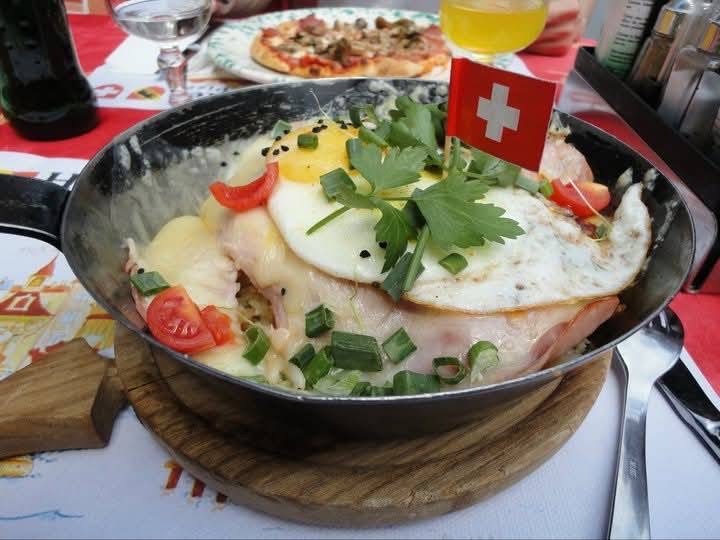
Swiss food (provided by Ai)
[Overseas Child Rearing Column_Switzerland]
Vol.1 A cosmopolitan society - accepting differences and living together
Vol.2 Experiences of pregnancy and childbirth - "Postpartum at home" supported by rational and warm care
Vol.3 Education that fosters "independence," "self-assertion," and "creativity"
Vol.4 Daily life in a "multicultural" and "natural" world
Vol.5 Firmly deciding "family rules"
Vol.6 Rethinking “Work” in Everyday Life
