EN-ICHI Opens Up the Future of Family and Community
[Voices of Japanese Parents Abroad_Switzerland Vol.4] Everyday Life Embracing Multiculturalism and Nature

Ai (not her real name) is raising four children in Switzerland. As we spoke with her, we could clearly see how much she enjoys parenting in a diverse cultural setting, embraced by Switzerland’s stunning natural environment.
Growing Up with Multiple Languages
— How are your children growing up in such a multicultural environment?
When it comes to language, our home is quite the mix. I speak to the children in Japanese, my husband uses Swiss German, and when the extended family gathers, we often speak English. The cousins communicate in Portuguese or French. On top of that, because there are many Albanian immigrants in our area, the kids even pick up some basic Albanian at school or kindergarten.
For my children, language isn’t something they “study”—it’s just a natural part of daily life. It’s something they need to live and connect with the people around them.
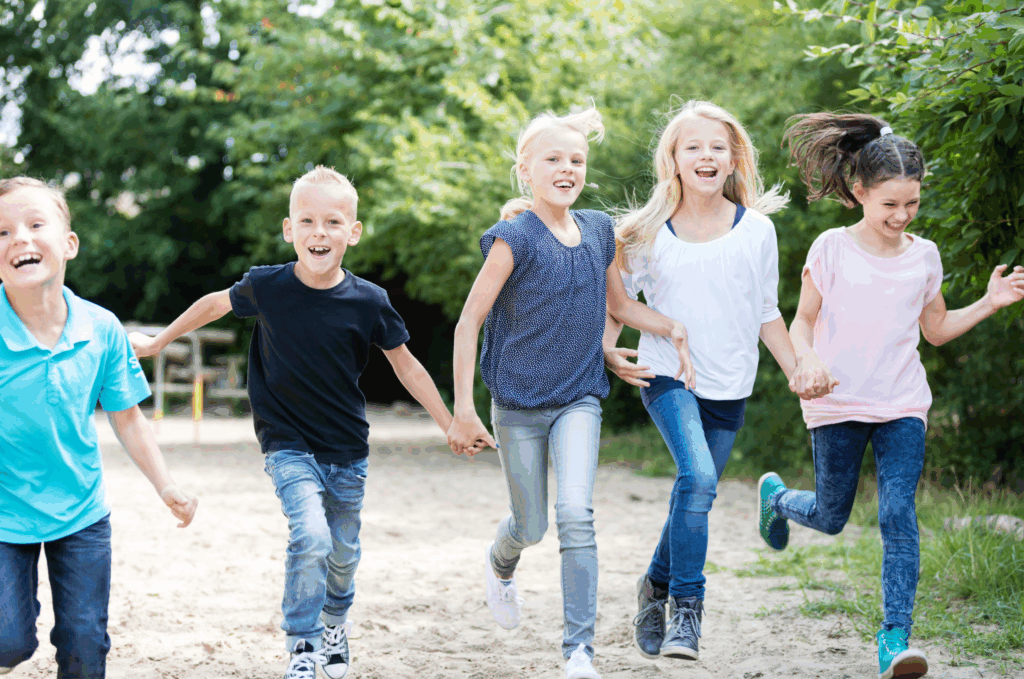
*The photo above is for illustrative purposes only.
A Place Where “Being Different” Is the Norm
— Switzerland has a large immigrant population. Do schools reflect that diversity in their approach?
Absolutely—they’re very well-prepared for it. Even in kindergarten, there are German language support classes for children who don’t speak the language. One of my kids had trouble with pronunciation, so he attended sessions with a speech therapist to work on it. What impressed me is that schools are very careful to support children without making them feel ashamed or inferior when they struggle with language.
Switzerland officially has four national languages—German, French, Italian, and Romansh. For example, in German-speaking public schools, children also learn French and English. In other language regions, the curriculum includes their local language plus German and English. It’s a multilingual educational environment by design.
There’s also something called “Cultural Day,” where children get to introduce their home culture to the class. My kids have shared Japanese greetings and taught their classmates how to fold origami. These experiences naturally help them engage with other cultures in a positive way.
When you grow up in a place where “being different” is normal, the whole idea of comparing yourself to others starts to fade. Children grow up understanding each other’s backgrounds, not because they’re told to, but because it’s just part of everyday life. Diversity isn’t something they learn about—it’s something they live.
Building Life Skills through Nature
— What do your children usually do on weekends?
On weekends, they’ll play on climbing structures, go cycling, or explore the forest right in front of our house. They’ll gather nuts and berries, roast sausages on sticks over an open fire, search for bugs, or collect acorns. In winter, they often end up having snowball fights. There’s a small hill nearby—not a ski resort, just a slope—and they love sledding down it.
Rather than playing with things made by people, they play in and with nature. I feel like this connection to the natural world helps nurture their creativity, observational skills, and, more than anything, their basic ability to live and adapt—their “life skills.”
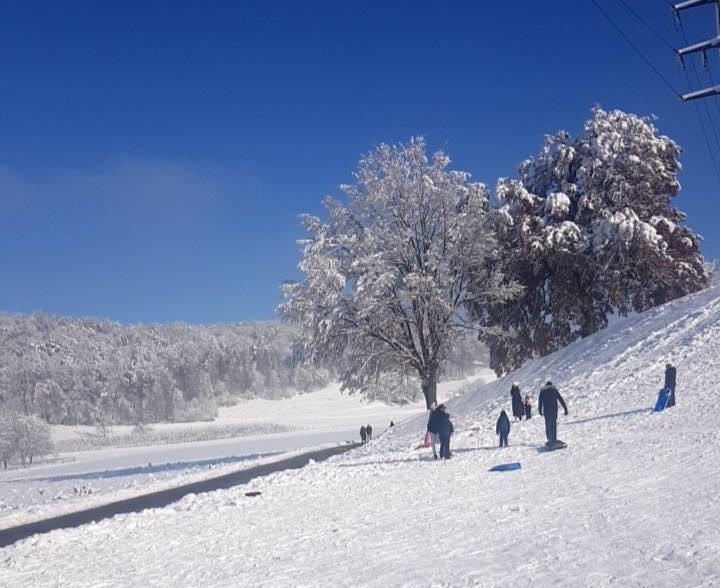
Playing in the snow (provided by Ai)
— It sounds like your kids really play out in nature!
Yes, and not just on weekends. Even on weekdays, they sometimes swim in the river on their way home! Switzerland has many rivers, including the Rhine, so it’s not uncommon for people to change into their swimsuits after work or school and float downstream. Along the way, they might pick up fallen firewood, build a fire, roast sausages, and then continue floating home. That’s just a part of daily life here.
— That’s incredibly wild! Do you ever go to leisure facilities?
Of course, there are places like zoos, science museums, and amusement parks—but to be honest, I don’t think they’re as developed or as numerous as in Japan. People here tend to love nature, so on weekends you’ll find many families out cycling, hiking, or barbecuing. Conversations about the weekend often go like, “We climbed this mountain,” or “That mountain is nice this time of year.”
That’s why, when we go back to Japan, my kids are completely amazed. With all the theme parks and arcades, they get so excited they can’t even sleep—like, “Why is Japan so much fun?!”
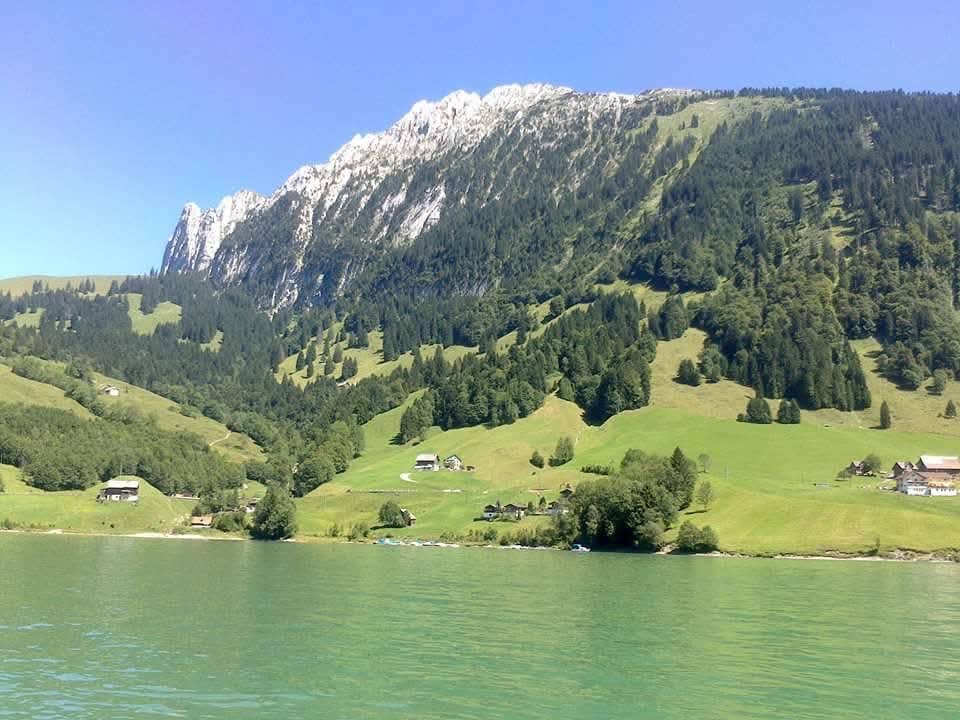
The Scenic Nature of Switzerland (provided by Ai)
[Overseas Child Rearing Column_Switzerland]
Vol.1 A cosmopolitan society - accepting differences and living together
Vol.2 Experiences of pregnancy and childbirth - "Postpartum at home" supported by rational and warm care
Vol.3 Education that fosters "independence," "self-assertion," and "creativity"
Vol.4 Daily life in a "multicultural" and "natural" world
Vol.5 Firmly deciding "family rules"
Vol.6 Rethinking “Work” in Everyday Life
